
Adventures in Nature: Gog-le-hi-te Wetlands.
In the afternoons, when my youngest son attends a preschool program, I make a point of getting outdoors and exploring new places with my eldest.
Gog-le-hi-te Wetlands is the kind of place you drive by on a random day and say: "Oooh yeah, I've been meaning to stop there." And then, you promptly forget about it until the next time you drive by and say the exact same thing.
The land is a restored wetland habitat located along the Puyallup River in Tacoma, Washington. It is on "the other side" of the river, by the railroad tracks, surrounded mostly by warehouses and shipping containers. The project itself is actually managed by the Port of Tacoma.
I learned about the site by coincidence, driving through the Port area on a random Saturday to attend a Touch-a-Truck event. I noticed the sign at the front of a barricaded parking area and immediately made a mental note. I am nothing if not a sucker for a good wetland.
Still, it took driving by that same barricaded lot another two or three times before I finally pulled out my phone and searched for a website I could leave open in my browser as a visible reminder to plan an actual stop.
And we finally did stop!

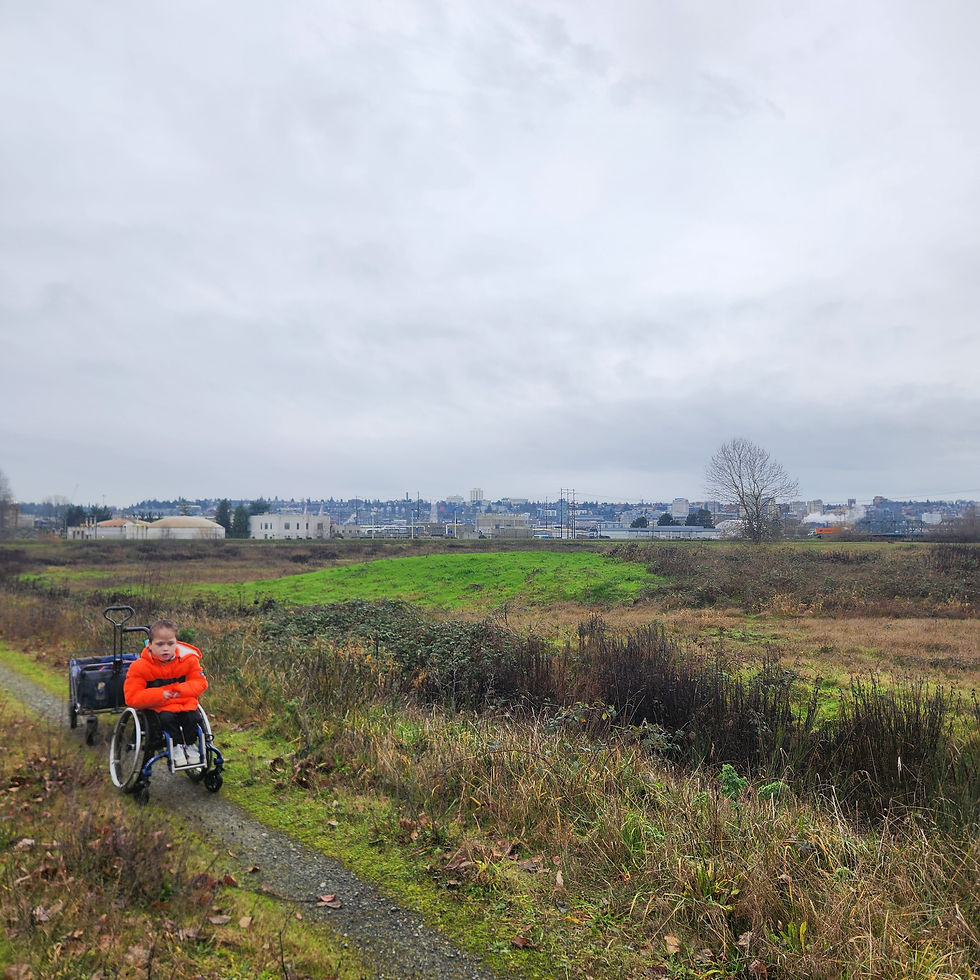
Being there in January was exactly what you would think: bare trees and far less wildlife than I would expect to see in warmer months. (Apparently, it is a good place for local birding.)
While it was our first visit, Gog-le-hi-te Wetlands is not a new site. It is actually the Port of Tacoma's oldest habitat restoration site. The work began in 1986 with two breaches of the Puyallup River to create estuary habitat for migrating salmon. The public access area is a total of 13.5 acres and a perfect place for a quiet stroll.
I will admit, though -- when thinking about the tapestry of "public lands," those managed by port authorities do not immediately come to mind.
But why not?
Shipping ports are major areas of human activity, and it is the kind of human activity that takes a significant toll on the environment.
Port authorities should play a role in restoration. They absolutely should be on the hook for funding, implementing, and managing these areas.
And certainly, as members of the community, we should be aware of the impact of port activity, the restoration and remediation work done, and the land that is subsequently opened for recreation and enjoyment.
As for the Gog-le-hi-te Wetlands: We are planning another visit later in the spring when nature turns green again.


Comments